





Best GM Truck for Horse Trailers Ohio
See which GM trucks at Coughlin fit your horse trailer size, hauling routine, and Ohio towing needs
Explore horse trailer shopping and truck options based on how many horses, tack, and trailer weight you actually haul
Call now to talk through your horse trailer setup and confirm which GM truck makes the most practical sense
| Sales | ||
| Day | Open | Closed |
| Monday | 9:00AM | 8:00PM |
| Tuesday | 9:00AM | 8:00PM |
| Wednesday | 9:00AM | 8:00PM |
| Thursday | 9:00AM | 8:00PM |
| Friday | 9:00AM | 5:00PM |
| Saturday | 9:00AM | 5:00PM |
| Sunday | Closed | Closed |
Why Horse-Trailer Truck Fit Starts With the Trailer, Not the Badge
The most common mistake in horse-trailer truck shopping is starting with the truck instead of the trailer. Buyers often jump straight to Silverado 1500 versus 2500HD versus 3500HD, but the better first question is what they are actually hauling and how that load behaves once horses, tack, passengers, and day-of-trip supplies are part of the picture.
Horse hauling is different from towing a stable equipment trailer because the setup changes with horse count, trailer construction, hitch style, water, feed, and whether the trailer includes living quarters. A 2-horse bumper-pull used for shorter Ohio trips points toward a different truck answer than a larger gooseneck used repeatedly across longer distances.
That is why the decision standard should be control, stability, and usable margin rather than a single max-tow number. A truck may look sufficient on paper, but the stronger question is whether it still feels composed once hitch weight, cab passengers, and cargo in the bed are all part of the towing routine. This is where practical truck fit starts to matter more than broad capability language.
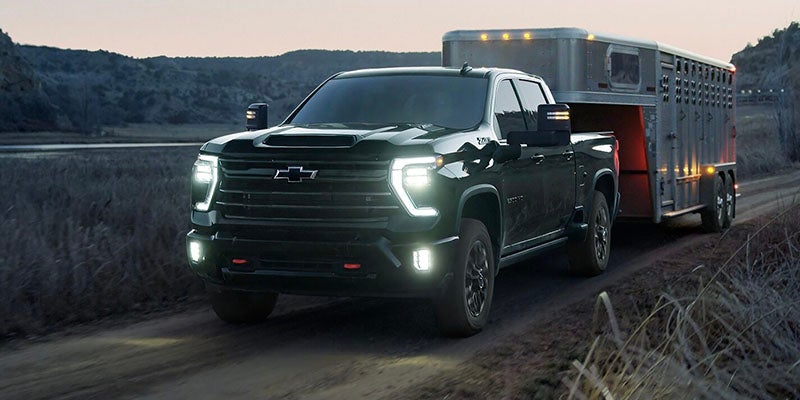
When a Silverado 1500 Is Enough for Horse Hauling
A properly equipped Silverado 1500 can be the right answer for some horse owners, which matters because many shoppers do not want to overbuy if their trailer use does not justify it. Where the 1500 usually makes the most sense is with a modest bumper-pull setup, limited horse count, and a truck that still needs to feel comfortable the rest of the week when it is not towing.
In that kind of routine, a half-ton can offer the right mix of towing ability, easier daily manners, and lower overall size without forcing the buyer into more truck than needed. The tradeoff is payload margin. A 1500 can work well when the full setup stays within its comfort zone, but that zone narrows once passengers, tack, bed cargo, and trailer weight all build together.
The better way to evaluate a Silverado 1500 is not to ask whether it can pull a horse trailer in the abstract. It is to ask whether your actual trailer, loading habits, and driving routine still leave enough margin for the truck to stay settled. For Ohio horse owners who trailer lightly and drive the truck often in normal life, that can make the 1500 the practical fit rather than a compromise.
When 2500HD Becomes the Smarter Step
The Silverado 2500HD often becomes the stronger choice when a lighter-duty truck starts feeling too close to the line, but a 3500HD still goes beyond what daily use requires. This is where many horse owners land because their towing needs have outgrown the easiest bumper-pull scenario, yet they still want a truck that does not feel heavier than necessary the rest of the time.
The advantage of 2500HD is not just more capacity. It is the added margin it creates around payload, braking feel, frame control, and overall stability under trailer load. That matters because horse owners are not only asking whether the truck can move the trailer. They are asking whether the full combination will feel calm and controlled through traffic, road changes, and repeated hauling days.
- Step up to 2500HD when payload margin starts shrinking once passengers, tack, hitch weight, and bed cargo are added to the towing routine.
- Use 2500HD as the middle-ground answer when a lighter truck feels too close to the limit but a 3500HD still exceeds what everyday use calls for.
- Prioritize stability and braking confidence when you tow often enough that control matters as much as rated capability.
This usually makes 2500HD the better fit for larger bumper-pull trailers, heavier two- or three-horse setups, and combinations where regular trailering adds more stress to the truck than a lighter-duty model should comfortably absorb. The tradeoff is living with more truck every day in exchange for more confidence under load.
When 3500HD Makes Sense for Larger Horse-Trailer Demands
There are horse-trailer situations where moving up to 3500HD is not excess. It is simply the right answer. This tends to happen when trailer size, horse count, hitch type, or living-quarters weight push the setup into a range where usable margin matters more than convenience.
That is where underbuying becomes a real risk. A 3500HD makes the most sense when the trailer itself is already defining the job as a heavy-duty one. Multi-horse goosenecks, heavier living-quarters trailers, and repeated longer-distance hauling all increase the value of stepping up because the question becomes less about pulling power and more about maintaining control, support, and confidence every time the trailer is hitched.
The tradeoff is clear. A 3500HD is more truck to live with in day-to-day use. But if the trailer already places the combination in heavy-duty territory, moving smaller often means giving up the margin that makes the setup feel right. At that point, bigger is not the goal. Better fit is.
How Daily Use Should Influence the Final Truck Decision
The right horse-hauler truck is not chosen in isolation. Many Ohio shoppers use the same truck for commuting, errands, farm work, family travel, and ordinary life between trailer days. That is why the final choice has to weigh towing confidence alongside how the truck feels when no trailer is attached.
This is where overbuying can happen. A larger truck may deliver impressive capability, but if the trailer setup does not require it, the owner may end up living with more truck than they truly wanted. At the same time, underbuying creates a different frustration by leaving too little payload or stability once the full horse-trailer routine is in motion. The best answer usually comes from deciding which side of that line matters more based on how often the truck tows, how heavy the trailer is, and how much non-towing life the truck still needs to handle.
- Choose the truck for the trailer you actually use rather than the heaviest setup you may never own.
- Let daily driving matter if the truck spends much more time off the trailer than under it.
- Move up when margin improves the routine instead of staying smaller simply to avoid living with a larger truck.
If the trailer is modest and everyday driving dominates, a Silverado 1500 may be the cleaner fit. If towing frequency, trailer size, or payload complexity has grown, 2500HD often becomes the better balance. If the trailer already defines the job as heavy-duty, 3500HD usually stops being a question and starts becoming the practical answer.
Frequently Asked Questions About GM Trucks for Horse Trailers in Ohio
Do you need a diesel truck to tow a horse trailer?
Not always. Diesel becomes more useful as trailer weight, horse count, distance, and towing frequency increase. For lighter horse-trailer use, a gas truck may still be the practical fit if payload, hitch weight, and stability remain in the right range.
What matters more for horse trailers, payload or tow rating?
Both matter, but payload often becomes the limiting factor sooner because it includes hitch weight, passengers, tack, and gear carried in the truck. A high tow rating does not replace the need for enough payload margin.
Can a bumper-pull horse trailer still require a heavy-duty truck?
Yes. A bumper-pull trailer can still point toward a heavy-duty truck when horse count, trailer construction, cargo, and hitch weight grow enough to reduce stability and payload margin in a lighter-duty setup.
How does living-quarters weight change the truck decision?
Living-quarters trailers add meaningful weight and complexity, which can shift the decision toward a larger heavy-duty truck. The added mass affects payload, hitch load, braking feel, and overall control under repeated trailering use.
(Note: This article focuses on providing valuable information and does not mention specific pricing, for more information about financing and car buying, please reach out to our dealership.)